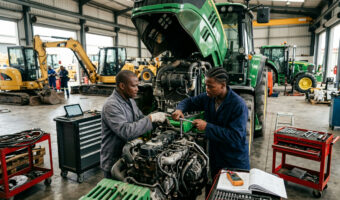
Earthmoving equipment plays a vital role in construction, mining, infrastructure development, road building, landscaping, and industrial projects around the world. These powerful machines are designed to move soil, rock, gravel, sand, debris, and other materials efficiently, allowing projects to be completed faster and with greater precision than would be possible through manual labor alone.
However, operating heavy machinery requires specialized knowledge, practical skills, and a strong understanding of workplace safety. For this reason, earthmoving equipment training has become an essential requirement for many employers seeking to improve safety, productivity, and operational efficiency on job sites. Earthmoving equipment training programs are widely used to teach operators how to safely handle heavy machinery while complying with workplace safety requirements.
APPLY NOWWhat Is Earthmoving Equipment?
Earthmoving equipment refers to a broad category of heavy machinery used to excavate, transport, grade, level, and move materials on construction and industrial sites.
These machines are commonly used for:
- Excavation projects.
- Site preparation.
- Road construction.
- Utility installation.
- Mining operations.
- Land development.
- Material transportation.
- Demolition work.
Modern earthmoving machinery has significantly improved the speed and efficiency of large-scale construction projects while reducing the physical demands placed on workers.
Why Earthmoving Equipment Training Matters
Heavy machinery can present significant risks when operated incorrectly.
Poor operating practices may result in:
- Workplace accidents.
- Equipment damage.
- Property damage.
- Project delays.
- Financial losses.
- Injuries to operators and nearby workers.
Training helps operators understand both the capabilities and limitations of the equipment they use. It also teaches safe operating procedures, machine inspections, maintenance awareness, and hazard identification. Safety-focused operator training is widely recognized as one of the most effective methods for reducing incidents involving earthmoving machinery.
Common Types of Earthmoving Equipment
Different machines are designed for specific tasks, and many training programs focus on particular equipment categories.
Excavators
Excavators are among the most commonly used earthmoving machines.
They are frequently used for:
- Digging foundations.
- Trenching.
- Site excavation.
- Material handling.
- Demolition projects.
Training programs often cover machine controls, digging techniques, equipment inspections, and safe operating procedures. Excavator operation is one of the most common areas of earthmoving equipment training worldwide.
Bulldozers
Bulldozers are designed for pushing large volumes of soil, debris, and construction materials.
Operators learn about:
- Blade control.
- Terrain management.
- Site preparation.
- Safety procedures.
- Equipment maintenance.
Bulldozer training commonly includes both theoretical and practical instruction.
Skid Steer Loaders
Skid steer loaders are versatile machines used in construction, landscaping, agriculture, and maintenance operations.
Training may include:
- Machine controls.
- Daily inspections.
- Load handling.
- Safe maneuvering.
- Operational procedures.
These compact machines are often used in confined work environments where larger equipment may not be suitable.
Dump Trucks and Dumper Vehicles
Dump trucks transport materials such as soil, sand, gravel, and demolition waste.
Operator training typically focuses on:
- Safe loading procedures.
- Vehicle stability.
- Transportation techniques.
- Site communication.
- Hazard awareness.
Proper training is particularly important because these vehicles frequently operate alongside workers and other machinery.
Motor Graders
Motor graders are commonly used for road construction, surface leveling, and site preparation.
Operators must understand grading techniques, machine positioning, and surface finishing procedures.
Topics Commonly Covered During Training
Although course content varies depending on the machine and industry, most earthmoving equipment training programs cover several key subjects.
Equipment Familiarization
Participants learn about:
- Machine components.
- Controls and instruments.
- Safety systems.
- Operational capabilities.
- Manufacturer guidelines.
Understanding how machinery functions is the foundation of safe operation.
Pre-Operational Inspections
Before operating equipment, operators are often required to conduct inspections.
Training typically includes:
- Visual inspections.
- Fluid checks.
- Tire or track inspections.
- Hydraulic system checks.
- Safety device verification.
Routine inspections help identify potential problems before work begins. Pre-start inspections are considered a critical part of heavy equipment operation.
Safe Operating Procedures
Safe operation remains one of the most important aspects of training.
Participants learn how to:
- Start and shut down machinery.
- Maneuver safely.
- Maintain visibility.
- Operate on uneven terrain.
- Work near personnel.
- Handle loads correctly.
These procedures help reduce the likelihood of accidents and equipment damage.
Mechanical Awareness
Many training programs introduce operators to the basic mechanical systems of the equipment they use.
Understanding these systems can help operators identify early warning signs of potential problems and report maintenance issues more effectively.
Hazard Identification and Risk Management
Construction sites and industrial environments often present multiple hazards.
Training programs teach operators how to identify and manage risks associated with:
Ground Conditions
Soft ground, unstable surfaces, slopes, and underground services can affect machine stability.
Blind Spots
Large machines may have restricted visibility, making awareness of surrounding workers and equipment especially important.
Overhead Hazards
Power lines, structures, and elevated equipment can create additional risks during operation.
Weather Conditions
Rain, strong winds, poor visibility, and extreme temperatures can affect machine performance and workplace safety.
Risk assessment is a core component of many earthmoving equipment training programs.
Practical Training and Assessments
Most earthmoving equipment programs combine theoretical learning with practical experience.
Practical sessions may include:
- Machine inspections.
- Basic operating exercises.
- Material handling tasks.
- Excavation activities.
- Grading exercises.
- Loading and unloading procedures.
- Emergency response scenarios.
Hands-on experience helps participants develop confidence while applying the concepts learned during classroom instruction. Effective operator training generally includes both theory and practical assessments.
Benefits of Earthmoving Equipment Training
Employers and workers often benefit from investing in professional operator training.
Improved Workplace Safety
Properly trained operators are generally better prepared to identify hazards and follow safe work procedures.
Increased Productivity
Understanding machine capabilities and operating techniques can help improve efficiency on job sites.
Reduced Equipment Damage
Training helps operators use machinery correctly, reducing unnecessary wear and costly repairs.
Greater Employee Confidence
Workers often perform more effectively when they understand how equipment operates and how to manage workplace risks.
Enhanced Compliance
Many industries require operators to demonstrate competency before being permitted to use heavy machinery. Training supports compliance with workplace safety requirements and operational standards.
Industries That Commonly Require Earthmoving Equipment Operators
Qualified operators are needed across numerous sectors.
These include:
- Construction.
- Mining.
- Civil engineering.
- Infrastructure development.
- Road construction.
- Quarrying.
- Utilities.
- Landscaping.
- Waste management.
- Agriculture.
As infrastructure projects continue to expand globally, demand for skilled machinery operators remains strong across many industries.
Choosing an Earthmoving Equipment Training Program
When comparing training options, individuals and employers may wish to consider:
- Course accreditation.
- Instructor experience.
- Practical training opportunities.
- Equipment availability.
- Industry relevance.
- Assessment methods.
- Refresher training options.
- Certification requirements.
Selecting a program that combines safety education with practical experience can help operators build the skills needed for real-world job site conditions.
Building Safer and More Efficient Worksites
Earthmoving equipment has transformed the construction and industrial sectors by making large-scale projects faster, safer, and more efficient. However, the benefits of these machines depend heavily on the knowledge and competence of the people operating them.
Through proper training, operators can develop the technical skills, safety awareness, and confidence required to work effectively with heavy machinery. By combining practical experience, risk management, equipment inspections, and safe operating procedures, organizations can create safer worksites while improving productivity and operational performance.